Cyclophosphamide is a DNA alkylating agent, and that is the answer to give this patient's wife. The setting is central nervous system vasculitis treated with pulse intravenous methylprednisolone followed by oral prednisone 1 mg/kg/day, with cyclophosphamide held in reserve for progression through or failure of corticosteroids. That escalation strategy is exactly what Bradley describes: high-dose glucocorticoids are the widely accepted first-line treatment, and for biopsy-proven cases cyclophosphamide may be used to achieve remission, after which transition to a steroid-sparing agent such as methotrexate, azathioprine or mycophenolate is desirable.
Cyclophosphamide is itself inert. It is a prodrug hydroxylated by hepatic cytochrome P450 to 4-hydroxycyclophosphamide, which equilibrates with aldophosphamide and then decomposes to phosphoramide mustard and acrolein. Phosphoramide mustard is the active nitrogen mustard: it alkylates the N7 position of guanine, producing DNA cross-links that block replication and trigger apoptosis in proliferating lymphocytes. Acrolein has no antitumor activity but is concentrated in urine and is directly toxic to the bladder urothelium, which accounts for hemorrhagic cystitis and, in the long term, bladder carcinoma; this is why mesna and vigorous hydration accompany pulse dosing. Aldehyde dehydrogenase inactivates aldophosphamide, and hematopoietic stem cells express it richly, so the stem cell pool is relatively spared at very high doses while lymphocytes are not. The other predictable toxicities are dose-dependent myelosuppression with a nadir around 7 to 14 days, infertility, opportunistic infection, and a later risk of myelodysplasia and bladder cancer that scales with cumulative dose.
The transferable principle is that knowing a drug is a prodrug, and knowing which metabolite does the therapeutic work and which does the damage, converts a list of side effects into a set of preventable ones. This sits at the Core level of RITE content, because cyclophosphamide as an alkylating agent, with acrolein-mediated hemorrhagic cystitis prevented by mesna, is standard knowledge for any resident who manages severe autoimmune neurological disease.
Incorrect Answers
- A. Acting as an analog of endogenous purines describes azathioprine, which is converted to 6-mercaptopurine and then to thioguanine nucleotides. Choose this if the question concerned thiopurine methyltransferase testing before starting therapy or a serious interaction with allopurinol.
- B. Calcineurin inhibition describes cyclosporine and tacrolimus, which block NFAT-dependent interleukin-2 transcription. Choose this if management hinged on trough drug levels, nephrotoxicity or posterior reversible encephalopathy syndrome.
- C. Dihydrofolate reductase inhibition describes methotrexate, given weekly with folate supplementation. Choose this if the agent were being used for maintenance after remission induction, with monitoring for pneumonitis and hepatotoxicity.
- E. Inosine monophosphate dehydrogenase inhibition describes mycophenolate mofetil, which selectively depletes guanosine nucleotides in lymphocytes. Choose this if the drug were twice-daily oral therapy limited mainly by diarrhea and carrying a teratogenicity warning.
Testing Pearls
- Cyclophosphamide is a prodrug; hepatic metabolism yields phosphoramide mustard, the DNA-alkylating agent, and acrolein, the bladder toxin.
- Mesna plus aggressive hydration prevents acrolein-mediated hemorrhagic cystitis; cumulative dose drives later bladder cancer and myelodysplasia risk.
- In CNS vasculitis, high-dose glucocorticoids are first-line, cyclophosphamide is used for remission induction in biopsy-proven disease, and a less toxic agent is substituted for maintenance.
References
- Jankovic J, Mazziotta JC, Newman NJ, Pomeroy SL, editors. Bradley and Daroff’s Neurology in Clinical Practice. 8th ed. Philadelphia, PA: Elsevier; 2022. p. 1066-1067.
- Salvarani C, Brown RD Jr, Calamia KT, et al. Primary central nervous system vasculitis: analysis of 101 patients. Ann Neurol. 2007;62(5):442-51.
- Emadi A, Jones RJ, Brodsky RA. Cyclophosphamide and cancer: golden anniversary. Nat Rev Clin Oncol. 2009;6(11):638-47.

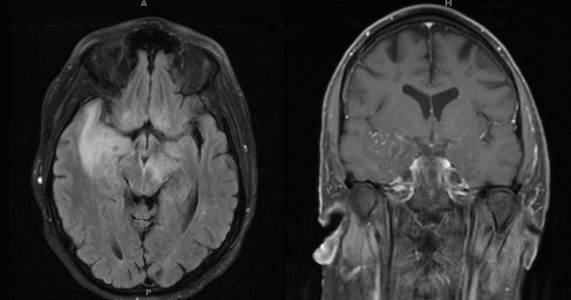 Axial T2 FLAIR (left); Coronal T1 with contrast (right)
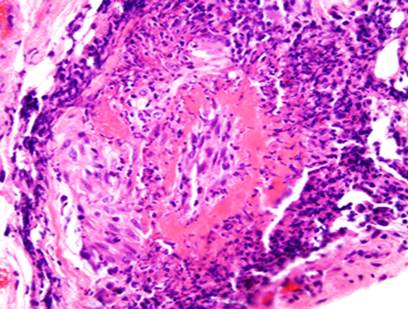 H&E
H&E